How to Prune Safely When You’re Older: Tools and Techniques
Most people assume that slowing down in the garden is just a natural part of getting older. I disagree. The problem isn’t age—it’s using the wrong tools and methods. Pruning, in particular, is one of the most repetitive, joint-straining tasks in gardening. But with the right ergonomic pruners, proper positioning, and a few simple adjustments, you can prune safely and effectively well into your 70s, 80s, and beyond. Let’s start with the tools that make the biggest difference.
Why Safe Pruning for Seniors Requires Better Tools
Standard pruners were designed for strong hands and young joints. They require a tight grip, repetitive squeezing, and often awkward wrist angles. For anyone with arthritis, carpal tunnel, or reduced grip strength, these tools can cause inflammation, trigger pain, and even lead to long-term injury. The key to safe pruning for seniors is choosing tools that reduce strain and increase leverage. Here are the three types of pruners I recommend based on decades of trial and error.
Ergonomic Bypass Pruners
These are your everyday workhorses. Look for models with rotating handles, cushioned grips, and a ratcheting mechanism that cuts in stages rather than one hard squeeze. The rotating handle keeps your wrist in a neutral position, which is critical for avoiding tendonitis. I’ve used several brands, and the ones with swivel handles cut my effort by about 40%. For safe pruning for seniors, this is non-negotiable.
Long-Handled Loppers
For branches thicker than half an inch, loppers provide both reach and mechanical advantage. The longer handles multiply your force, so you don’t have to squeeze as hard. Look for telescoping handles that adjust to your height—this saves your back. I recommend loppers with a compound-action gear system. They cost a bit more, but they’re worth every penny when your hands are stiff. Remember: safe pruning for seniors means never fighting a branch.
Pole Pruners
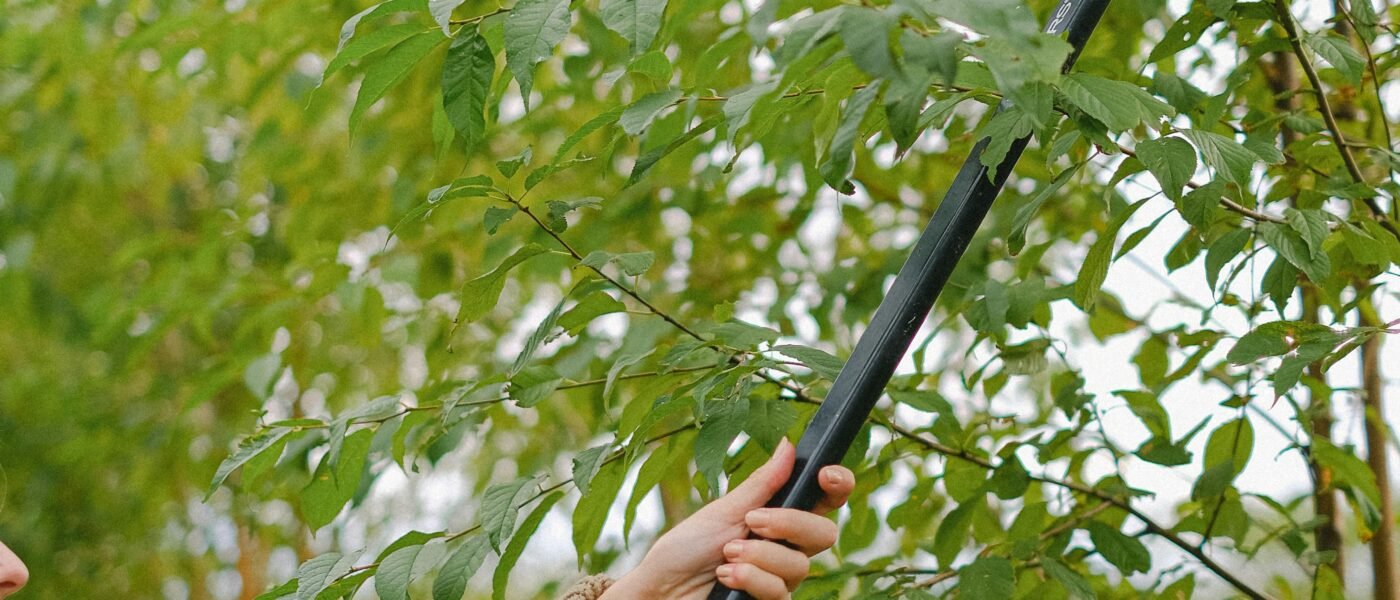
If you have trees or high shrubs, a pole pruner eliminates the need for ladders or overhead reaching—two major fall risks. The best models have a lightweight fiberglass pole and a rope-pull mechanism. You stand on the ground, pull the rope, and the blade cuts cleanly. I’ve used these to prune ornamental pear trees without ever leaving my feet. That’s the definition of safe pruning for seniors.
Techniques That Protect Your Joints
Tools alone won’t save you if your technique is poor. Over the years, I’ve developed a set of habits that minimize strain and maximize safety. Here’s what I do every time I prune.
Warm Up Before You Start
This sounds simple, but it’s the step most seniors skip. Spend five minutes doing gentle hand stretches and shoulder rolls. I also run my hands under warm water for a minute—it increases blood flow to the joints. Cold hands are stiff hands, and stiff hands are prone to injury. This is a foundational part of safe pruning for seniors that many ignore.
Use Two Hands Whenever Possible
Even with ergonomic pruners, one-handed cuts put all the force on your grip. For every cut, I place my second hand on the tool’s handle or the branch itself to stabilize it. This distributes the load and reduces the chance of slipping. Slipping is how you get cut fingers or twisted wrists. Two hands, one cut—that’s my rule.
Position Yourself Correctly
Don’t stand flat-footed and reach. Instead, move your body so the branch is at chest level or slightly below. If you’re pruning a low shrub, use a kneeling pad or sit on a low stool. I keep a padded garden kneeler with handles that I can use to stand back up. For overhead pruning, use a pole pruner or step up on a sturdy, low platform—never a ladder. Falls are the number one cause of injury in older gardeners, and safe pruning for seniors means staying grounded.
Cut at the Right Angle
Make your cuts at a 45-degree angle, just above a bud or lateral branch. This promotes faster healing and reduces the risk of disease. But more importantly, a clean cut requires less force than a ragged one. Dull blades force you to squeeze harder, which is exactly what we’re trying to avoid. Sharpen your pruners regularly—I do mine every few weeks during peak season. For Related Gardening Guide, you can find more on tool maintenance.
When to Prune and How Often
Timing matters almost as much as technique. Pruning at the wrong time can stress plants and make the job harder. Here’s a simple schedule I follow.
- Late winter/early spring: Prune most deciduous trees and shrubs while they’re dormant. The branches are easier to see, and the cuts heal before growth starts.
- After flowering: For spring-blooming shrubs like lilacs and forsythia, prune right after the flowers fade. This keeps the plant healthy and reduces the need for heavy cuts later.
- Summer: Light pruning for shape or to remove dead wood. Avoid heavy cuts in hot weather—plants are stressed, and so are your joints.
- Fall: Minimal pruning. Focus on cleaning up fallen leaves and debris. Pruning too late can stimulate new growth that winter kills.
By spreading pruning tasks across the year, you avoid marathon sessions that leave your hands aching. Safe pruning for seniors is about working smarter, not harder.
Managing Arthritis While Pruning
I’ve had osteoarthritis in both hands for over a decade, and I’ve learned a few tricks that make a real difference. First, take breaks every 15 minutes. Set a timer if you have to. Second, use a foam grip extender on your pruners—it widens the handle and reduces grip pressure. Third, apply topical anti-inflammatory gel before and after pruning. Some of my readers swear by voltaren, but always check with your doctor first. For more authoritative guidance on arthritis and physical activity, visit the Arthritis Foundation’s gardening page—it’s a fantastic resource.
Common Mistakes to Avoid
Even experienced gardeners make errors. Here are three I see most often in older pruners.
- Using dull tools: Dull blades crush rather than cut, requiring more force and damaging the plant. Sharpen your pruners after every few hours of use.
- Over-pruning: Removing more than 25% of a plant’s canopy in one season stresses it and can lead to dieback. Less is more.
- Ignoring pain: If your hand hurts, stop. Pushing through pain causes inflammation and can lead to chronic issues. Listen to your body—that’s the core of safe pruning for seniors.
Pruning Shouldn’t Hurt
Safe pruning for seniors is not about giving up the garden—it’s about adapting so you can keep doing what you love. The tools exist. The techniques are proven. And your body deserves the care. After 15 years running a nursery and decades of gardening with arthritis, I can tell you this: the right pruner, the right posture, and the right pace will keep you pruning for years to come. Start with one small change—maybe a pair of ergonomic pruners or a kneeling pad—and see how it feels. Your joints will thank you.
Watering Considerations for Your Pruned Plants
After you prune, your plants need proper watering to recover and thrive. Drip irrigation is ideal because it delivers water directly to the roots without wetting foliage, which reduces disease risk. Soaker hoses work well for garden beds, while manual watering gives you control but requires more bending. For seniors, I recommend drip systems with timers—they’re set-and-forget. This ties back to safe pruning for seniors because less bending and carrying means less strain on your body overall.
Leave a Reply